
Residential Project
Bathroom Quartz Countertops Jacksonville FL
Bathrooms are small, high-contact rooms where a nonporous surface pays off daily — and where a countertop project finishes quickly.
Call now for service availability. Please have your 5-digit ZIP code ready.
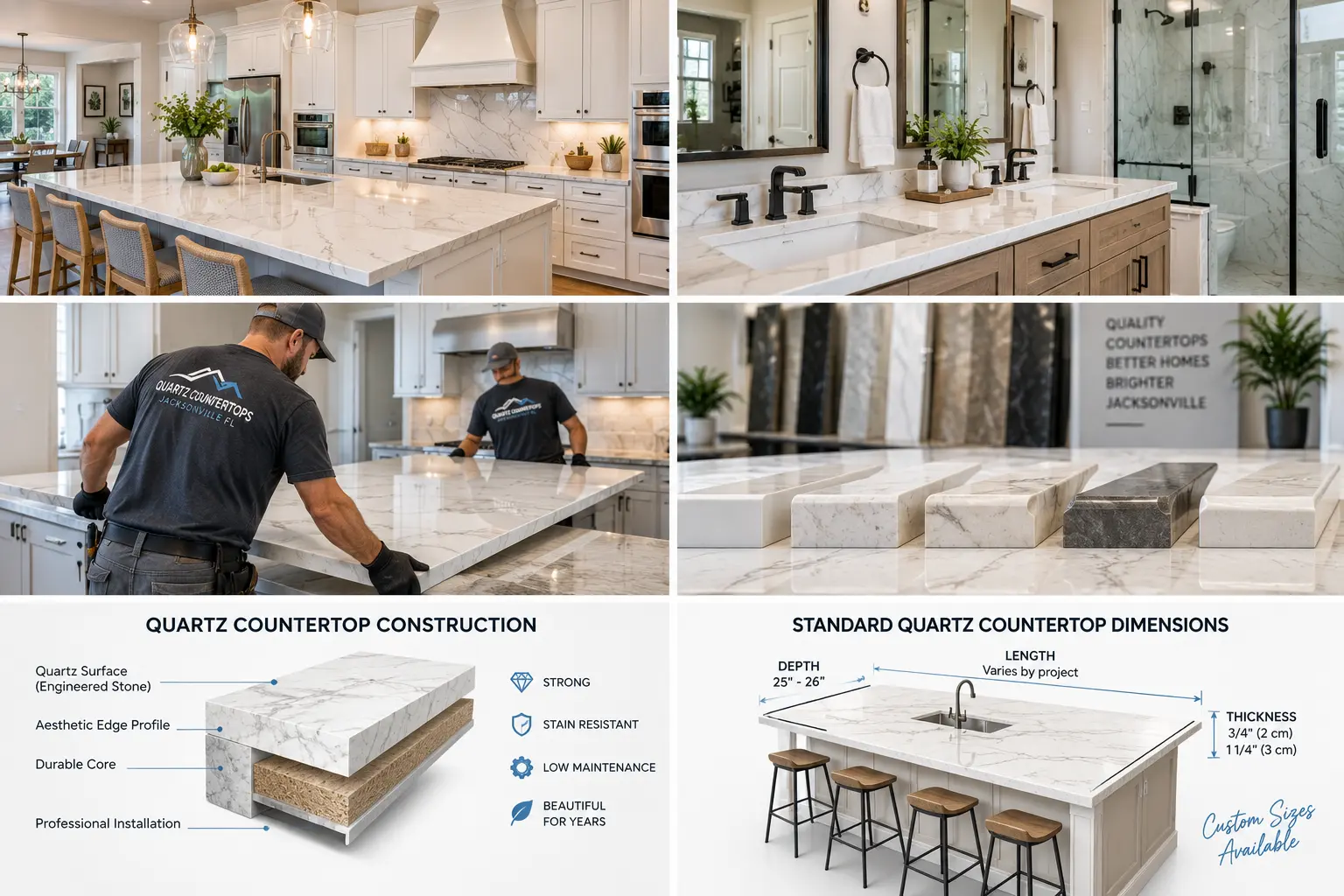
Bathroom countertops take a specific kind of abuse: toothpaste, mouthwash, hairspray, cosmetics, hand soap and standing water around the faucet. A nonporous engineered surface is well suited to that because nothing soaks in and there is no sealer to maintain.
Bathroom projects are also smaller, which makes them a practical first quartz project or a natural add-on to a kitchen job.
Sizing a Quartz Vanity Top
Standard vanity depths run around twenty-two inches, though older cabinets vary. Widths follow the cabinet: 24, 30, 36, 48, 60 and 72 inches are common, with 60 and 72 usually configured as double sinks.
Counter height matters more in bathrooms than people expect. Older vanities sit around thirty inches; comfort-height vanities sit closer to thirty-six. A new top does not change the cabinet height, so if the vanity feels low, that is a cabinet decision, not a countertop one.
Sink Styles
For double vanities, confirm the sink spacing against the cabinet layout before template. Two bowls that are technically possible can still feel cramped if the faucet spacing was never checked.
- Undermount — the standard pairing with quartz. Clean counter surface, easy to wipe into the bowl.
- Vessel — sits on top of the counter; the top is cut with a small drain hole only, and the faucet is usually taller or wall-mounted.
- Integrated — a single molded piece. Available in some solid-surface materials but not in standard quartz slab fabrication.
- Drop-in — possible, but rarely chosen once someone has seen an undermount in quartz.
Splash Options for Bathrooms
A four-inch quartz splash is the usual choice and does real work: it keeps water off drywall behind the faucet. Side splashes matter where a vanity meets a wall on one or both ends, which is common in guest baths and powder rooms.
A full-height quartz splash behind a vanity is a striking upgrade in a primary bath, especially with a wall-mounted faucet or a large mirror.
Moisture, Humidity and Everyday Reality
Quartz does not absorb water, so bathroom humidity does not affect the surface itself. What still deserves attention is what the countertop sits on: the vanity cabinet. Persistent standing water at a seam between the top and the wall, or around a poorly sealed faucet base, can still reach the cabinet underneath. Caulk lines get inspected and are worth re-checking every couple of years.
Common bathroom products that can damage quartz include nail polish remover, some drain cleaners, bleach-based cleaners and strongly alkaline products. Wipe them up promptly and stick to mild soap for routine cleaning.
Color Choices in Small Rooms
Small bathrooms handle bold patterns better than large kitchens do, because the surface area is limited. A dramatic Calacatta-inspired vein that would overwhelm a big kitchen can look tailored across a single vanity. Conversely, if the bathroom already has patterned tile, a quieter quartz keeps the room calm.
See our Calacatta quartz guide for pattern scale considerations, or the general colors guide for pairing with tile and cabinetry.
Homeowner Questions
Frequently Asked Questions
Can quartz be used for bathroom vanities?
Yes. Quartz is a very common vanity material. It is nonporous, needs no sealing and stands up to cosmetics, toothpaste and daily water exposure.
What thickness is typical for a vanity top?
Both two and three centimeter material appear in bathrooms. Three centimeter gives a substantial edge without a build-up; two centimeter is often built up at the edge for a thicker look.
Does nail polish remover damage quartz?
Acetone and similar solvents can affect the resin in engineered quartz. Wipe spills immediately and do not leave a soaked cotton pad sitting on the surface.
Can I get a matching quartz splash behind the vanity?
Yes — a four-inch splash, side splashes, or a full-height slab splash. Full-height is a common upgrade in primary baths.
Is a double-sink top one piece?
Usually, if the vanity width fits within the usable slab dimension. Very wide double vanities may require a seam, which is typically placed between the two bowls.
Can a bathroom top be cut from leftover kitchen material?
Sometimes. If a kitchen project leaves usable remnant material, a small vanity top can occasionally come from it. Ask during layout planning.
Planning New Quartz Countertops?
Tell us about the room, the cabinets and the surface you have now. We will walk through material options, measurement and installation so you know what to expect before anything is ordered.
Call now for service availability. Please have your 5-digit ZIP code ready.
Request Estimate